What is a changelog tool, and why use one?
A changelog tool is a system for telling your users what changed: every release, every fix, every announcement. The job sounds simple, but doing it well means scheduled posts, segmented audiences, branded styling, and a way to collect feedback on what you shipped. A spreadsheet or a Notion page falls over the moment you actually need any of that.
Required features for a serious changelog tool
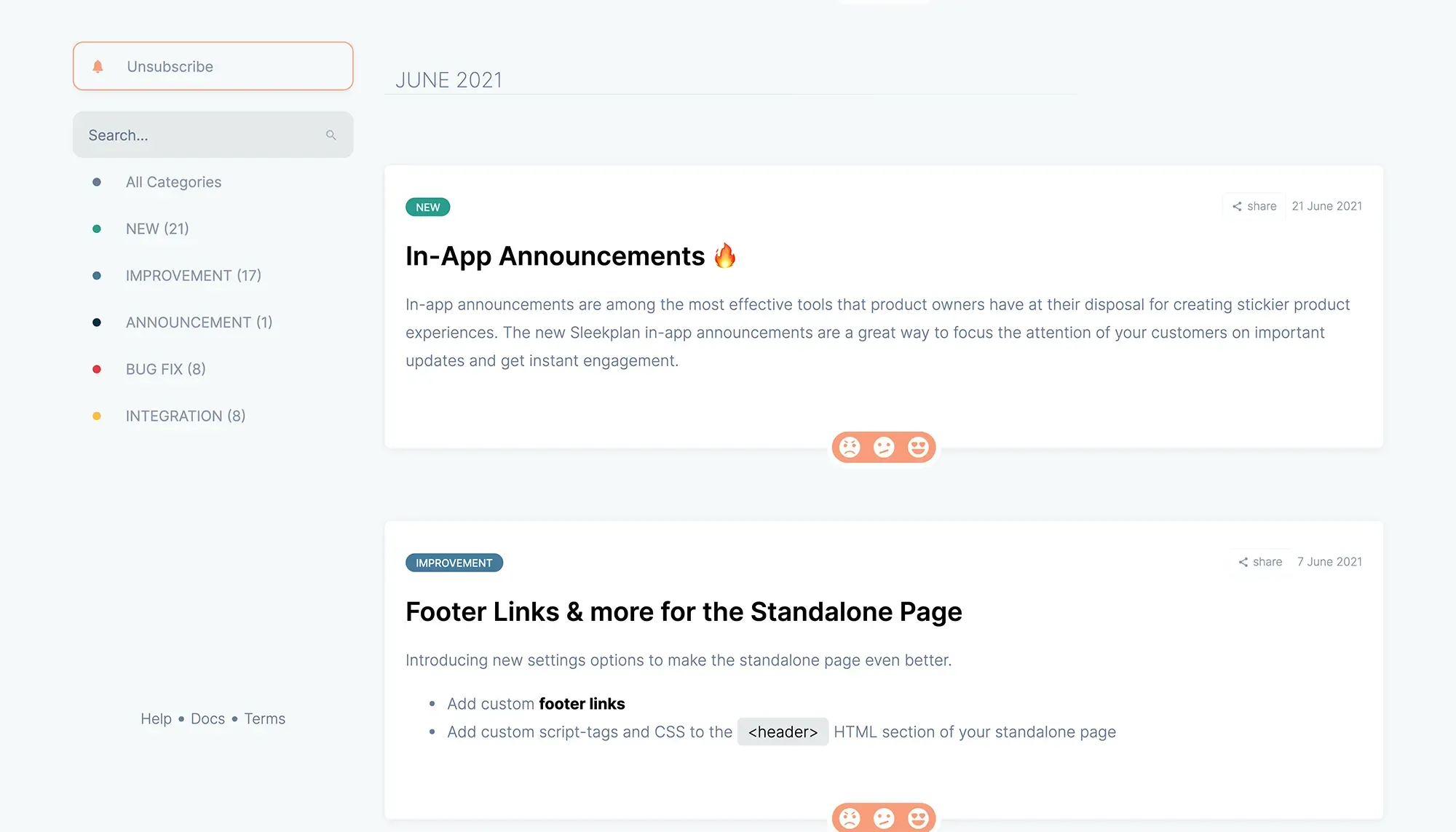
- Scheduled posts — write Tuesday, ship Thursday morning, announce Thursday afternoon. No human bottleneck.
- Email digests — your users don't live in the widget. Bring the changelog to their inbox on a cadence they pick.
- Searchable feed — release notes accumulate fast. A search box and category filters turn the changelog into a self-serve reference.
- Public or private — internal teams need a changelog too. Same tool, different access.
- Brand-matched appearance — custom domain, colours, copy. The changelog is a touchpoint with your product, not someone else's.
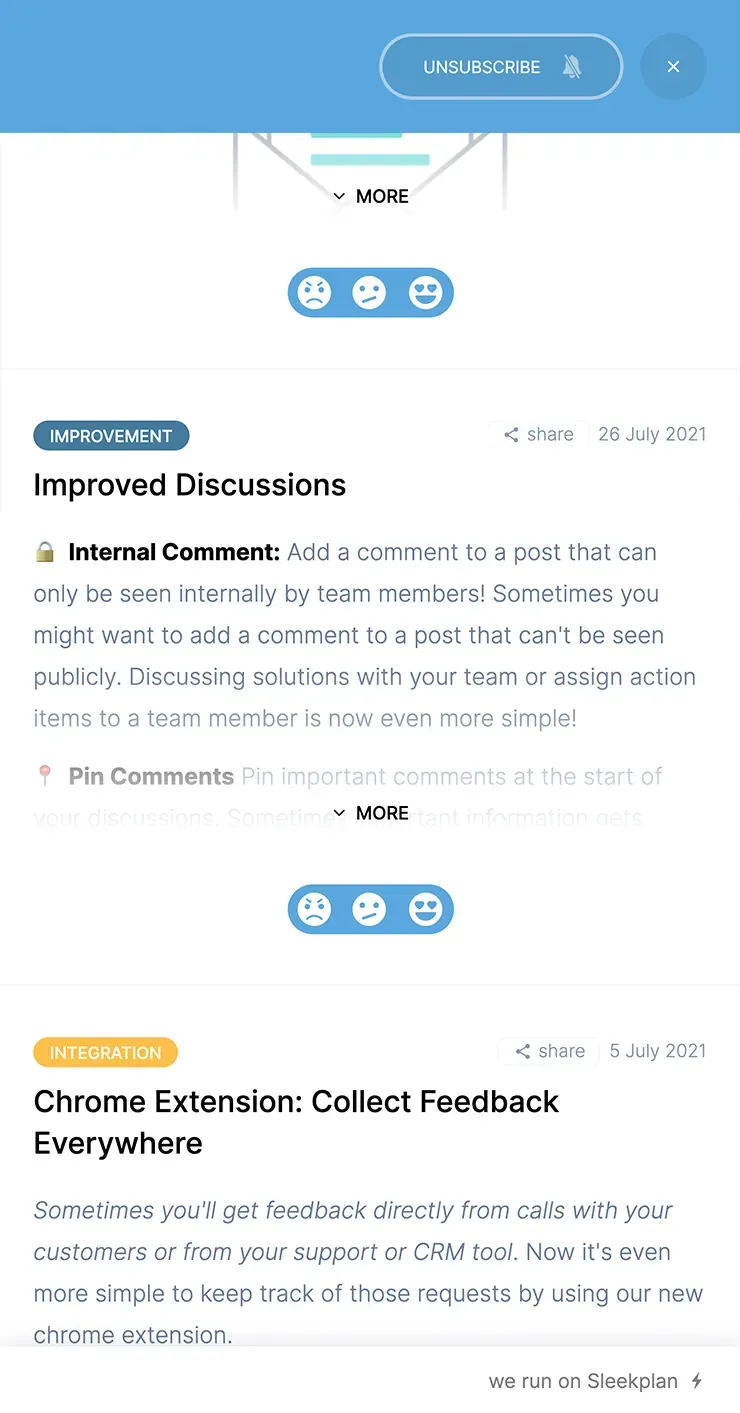
- Feedback collection — every release is a hypothesis. Capture whether users liked what you shipped.
Why Sleekplan
Sleekplan ships all six. Plus the changelog is wired into the same workspace as your feedback board and public roadmap, so a request you accepted six months ago auto-publishes to the changelog the moment its status flips to Released. The whole feedback loop closes itself. Start free.