Why September’s communities matter for product teams
September 2025 was a live lab for user-generated content and community engagement. Across activism, awards, Discords, and forums, people shipped ideas in public. The signal for product teams is simple: when communities care, they create. Our job is to capture that energy, translate it into decisions, then close the loop with clarity.
What we observed, and why it matters
- Story first, data second. In New Orleans, 1,200 students marched to honor Chance Smith, using poems and songs to turn statistics into lived experience, a cue to elevate narrative alongside metrics. See the recap from DoSomething for context: youth-led actions and voter drives.
- Co-creation over extraction. At Thailand’s Creative Excellence Awards, “Wisdom Has Fallen” paired craftspeople with design brands, then shared income and authorship. Details here: Creative Excellence Awards 2025.
- Infrastructure beats vanity. Reddit shifted community stats toward weekly visitors and contributions, and expanded Post Check and mod tools, a strong nudge to optimize for health, not size. Read the changelog: Reddit September updates.
- Formats become frameworks. Trends like “Woah A Turtle” showed how simple audio plus on-screen text can encode everyday tensions for fast reuse, a pattern product teams can borrow for release notes and feedback prompts. Trend breakdowns here: September TikTok trends.
Takeaway: communities respond to clear problems, flexible formats, and visible outcomes. Give them scaffolding and ownership, then follow through.
Field notes from September, translated into product patterns
- Youth activism, New Orleans, 1,200 students: personal testimony moved people to act. Product pattern: when announcing a fix, pair the metric with a user quote, for example, “Crash rate down 43 percent, I can finally export without force quitting.” Source: DoSomething.
- National Voter Registration drives: thousands of micro events beat one big announcement. Product pattern: distribute small feedback prompts across surfaces, in-app nudges after actions, quarterly email pulse, and a lightweight forum thread.
- Buddy benches, age 9 founder: tight problem framing, fast community funding, three benches in two months. Product pattern: ship a small but complete MVP, set a crisp success window, then report back publicly.
- Creative Excellence Awards: co-design shifted artisans from executors to partners. Product pattern: recruit power users as co-designers for feature betas, credit them in changelogs, and share revenue if relevant.
- Reddit governance tools: moderation scaled via suggested mods and pre-flight checks. Product pattern: establish contributor roles, guidelines in-context, and helpful automation that respects human judgment.
From UGC to product insight, a clear workflow
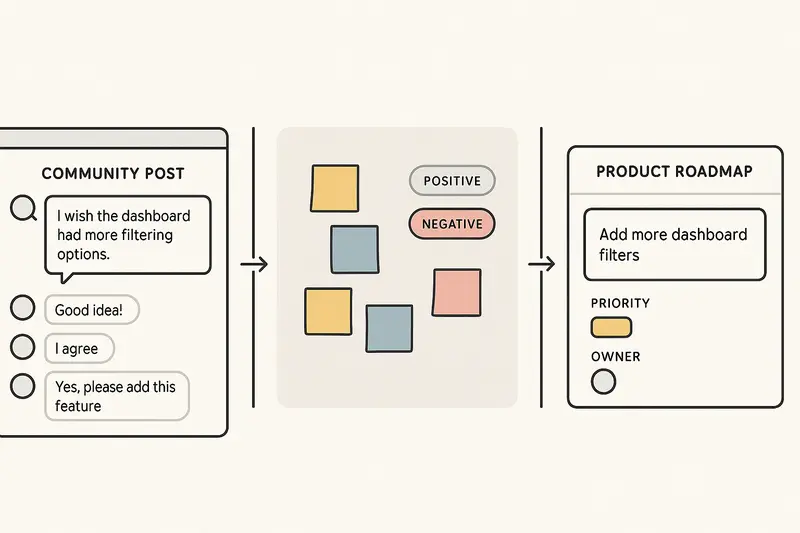
- Capture: centralize feedback across posts, comments, forms, and support tickets. Tag by theme, user segment, and sentiment.
- Cluster: group related requests and stories. Keep examples attached, not just counts.
- Compare: weigh demand, impact, and effort. Prefer problems with real user stakes over loud requests with vague value.
- Prioritize: publish criteria, not just outcomes. Show what wins and why.
- Act: create an owner, deadline, and definition of done. No half-finished work shipped.
- Close the loop: tell contributors exactly what changed, include screenshots or a short clip, and invite follow-up.
If you want AI-assisted triage that links themes to roadmap items, see how we approach it with Sleekplan Intelligence.
Breaking down September’s content formats for B2B use
- Call-and-response audio, like “Woah A Turtle,” becomes a friction explainer. Example: two personas debating a setting, captioned with the precise tradeoff your feature solves.
- Reliability reels, inspired by “I’ll Be There,” highlight what customers can count on: uptime streaks, support SLAs, or “bugfixes in 7 days” cuts.
- Masked vulnerability, from “Rating Makeup Removers,” can humanize enterprise work. Frame a before and after: “Incident postmortem, 10 out of 10 learning,” then share the fix.
- Micro-virality beats mass reach: build for niche resonance inside your own community first. A tight, relevant post in a customer Slack beats an overpolished announcement with no replies.
Reference trends and examples: New Engen September trends.
Metrics that indicate healthy engagement
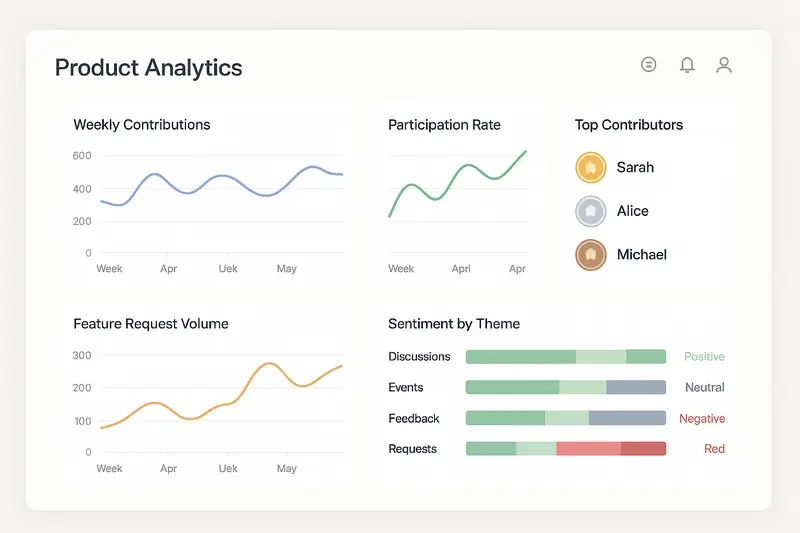
- Weekly contributors, unique and returning
- Participation rate per active user, not per total user
- Feedback depth, average characters or minutes watched
- Theme completeness, coverage of top 5 problem areas
- Close-the-loop time, average days from feedback to reply
- Crafted outcomes, number of releases with linked user stories
Tip: publish a public changelog entry that links to one or two real user threads when feasible.
Quick answers for busy teams
- What is user-generated content? Any content your community creates, posts, or shares. Think requests, bug reports, how-tos, reviews, and demos.
- How do you measure community engagement quality? Look for repeat contribution, actionable detail, and peer-to-peer replies. Volume without substance is noise.
- How do you turn UGC into roadmap items? Cluster feedback by problem, validate with examples, estimate impact, then commit a clear owner and timeline.
- How often should we close the loop? Batch weekly for minor updates, immediately for critical fixes, and after every release for beta participants.
Principles we stood by while reviewing September
- Quality over speed: ship fewer, finished touches.
- Details compound: microcopy, error states, and defaults do heavy lifting.
- Human judgment over dashboards: data informs, people decide.
- Own the outcome: no orphan features, assign stewardship.
- Clarity wins: in interface and in writing.
Final thought
September showed how communities power outcomes, from students organizing in the streets to moderators refining online spaces to artisans co-designing their future. The pattern repeats across domains: clear problems, shared authorship, visible results. Build the rails, then let your users drive.